C++ Bücher
Prof. Richard Kaiser hat die Entwicklung von C++ seit über 20 Jahren mit Büchern und Trainings zum jeweils aktuellen Stand von C++ begleitet.
C++ mit Visual Studio 2022 und Windows Forms Anwendungen

C++ mit Visual Studio 2019
Im Herbst 2020 erschienen die beiden neuen Bücher C++ mit Visual Studio 2019 und C++ mit Visual Studio 2019 und Windows Forms Anwendungen im Springer Verlag. Sie stellen den moderne Sprachstandard C++17 auf dem Stand von Visual Studio im Mai 2020 dar. Für die Übungen kann das freie Visual Studio Communitiy verwendet werden.
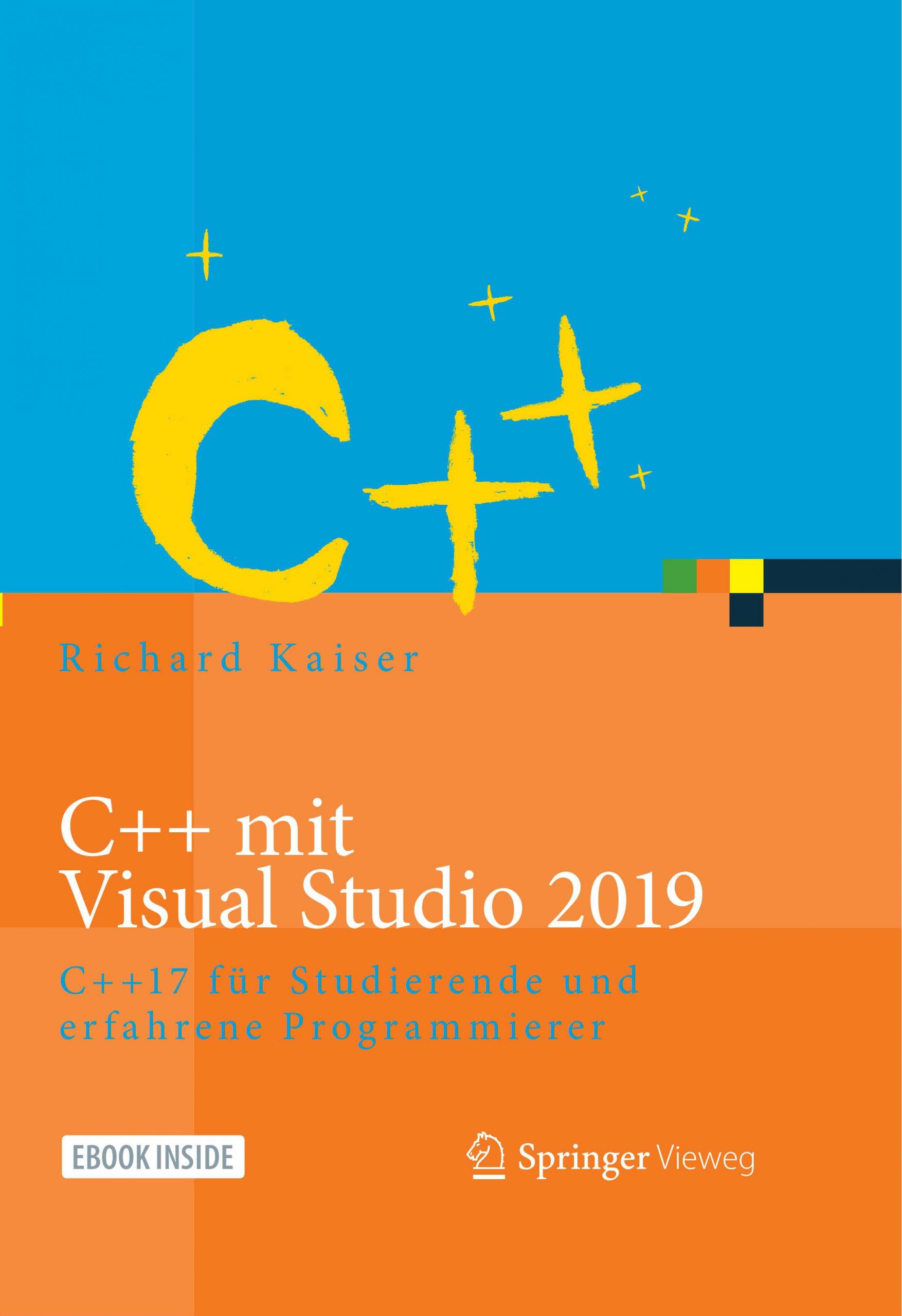
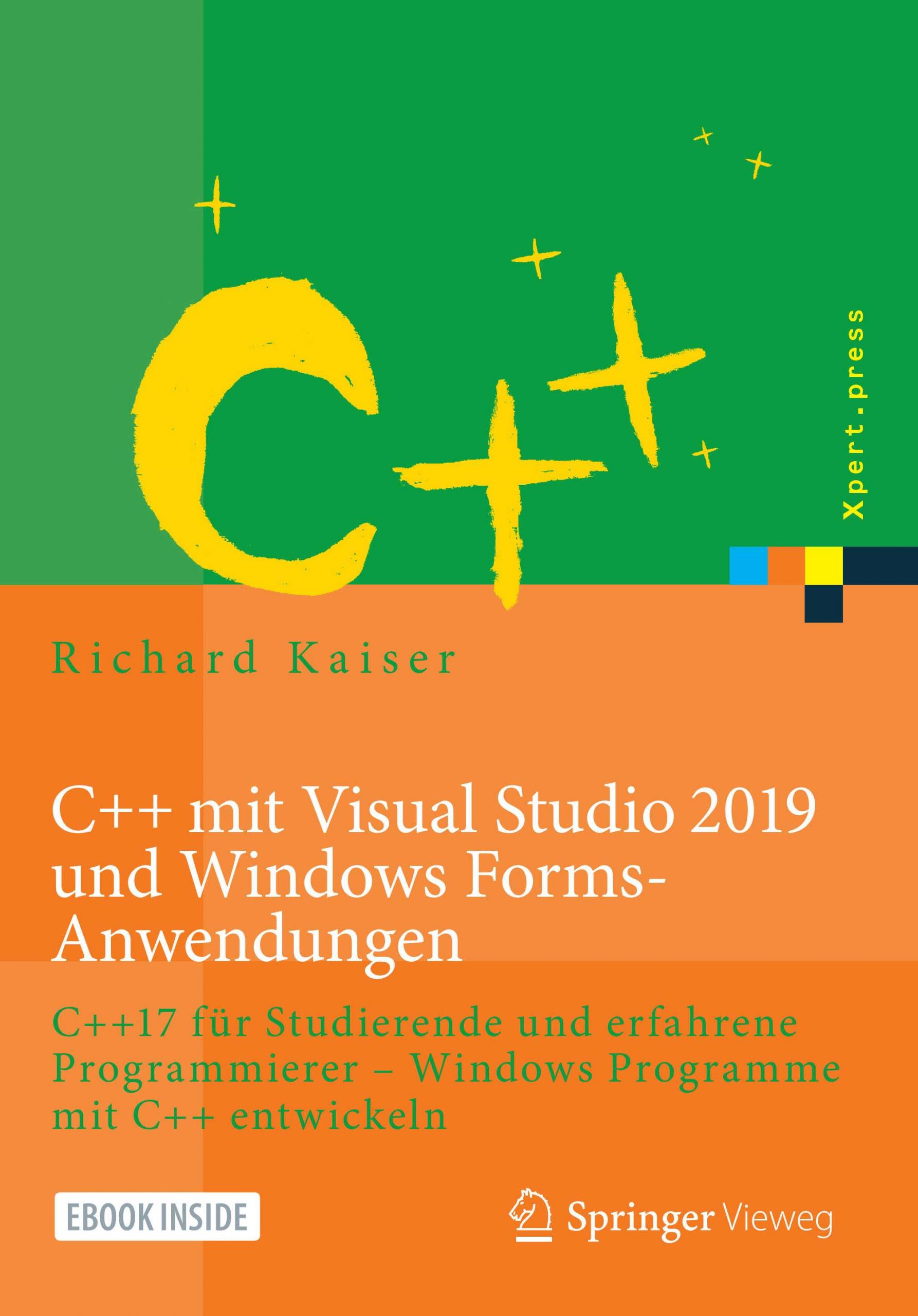
Es sind Lehrbücher, die keine Vorkenntnisse voraussetzen. Und es ist sind Fachbücher, die erfahrene C++-Programmierer auf den neuesten Stand bringen. Sie zeigen die zahlreichen Neuerungen gegenüber früheren Versionen von C++ und Visual Studio. Viele Beispiele illustrieren, wie man diese vorteilhaft einsetzen kan
C++ Bücher aus den letzten 20 Jahren


Seminare
Prof. Richard Kaiser führt seit vielen Jahren C# Seminare und C++-Seminare durch. Diese richten sich an professionelle Software-Entwickler und Firmen. Zu seinen Kunden gehören renommierte Weltkonzerne, kleine und mittelständische Unternehmen.
Alle Kurse sind Intensivkurse, bei denen die Teilnehmer auf ein Niveau geführt werden, das für einen professionellen Einsatz vorbereitet. Die Inhalte und der Aufbau der Schulungen hat sich bei zahlreichen Schulungen bewährt. Die Themen können an Ihre individuellen Wünsche und Vorkenntnisse angepasst werden.
C# Kurse
C++ Kurse
Diese Schulungen können sowohl für Visual Studio 2022 als auch für andere Compiler (z.B. gcc) durchgeführt werden.
- C++ Grundkurs mit Visual Studio 2022 / C++ Basics
- C++ Aufbaukurs mit Visual Studio 2022 / Advanced C++
- C++11/C++14/C++17/C++20 mit Visual Studio 2022
- C++ Kurse mit dem gnu gcc Compiler
- Embedded C++ Grundkurs / Embedded C++ Basics
- Embedded C++ Aufbaukurs / Embedded C++ Advanced
- Embedded C++ und Misra C+ 2023
Öffentliche Seminare
Software Qualitätssicherung
- Qualitätssicherung in der Software- und Systementwicklung (von Dr. Alexander Kaiser)
- Automatisierte GUI Tests mit Selenium (von Dr. Alexander Kaiser)